
Best Postural Support Features for Complex Seating Needs
Compare postural support features for complex seating, from tilt and recline to pressure management, and learn how each protects posture and skin.

Last Updated: 17 November 2026
Quick Summary
The best postural support features control the pelvis first, then the trunk, then the legs, in that order. A contoured pelvic support or belt sets the foundation, with lateral supports, trunk laterals and a chest harness added only as far as the person needs. Tilt-in-space, back angle recline and adjustable footplates then manage pressure, tone and hip angle.
- Record pelvic position, trunk alignment, hip and knee angles, skin integrity and tone before equipment arrives.
- A contoured cushion holding the pelvis in neutral protects skin and stabilises posture at the same time.
- Tilt-in-space keeps the hip angle constant while back angle recline opens the hip and increases sacral shear.
- Set footplates first, then back angle, then tilt, and re-check all three after any cushion change.
- Hire suits hospital discharge, trial periods, transitional care and short-term rehabilitation where posture is still changing.
Table of Contents
- What Postural Support Features Actually Change Outcomes
- Specialist Seating Assessment Checklist for Occupational Therapists
- Wheelchair Positioning Supports: Pelvis, Trunk and Legs
- Pressure Management Seating: What to Look For in the Cushion Interface
- Tilt-in-Space, Back Angle Recline and Adjustable Footplates
- Specialist Seating Hire for Short-Term and Transitional Needs
- Maintenance, Hygiene and the Feedback Loop After Handover
- Book a Venneo Velocity Assessment Within 48 Hours
- Frequently Asked Questions
What Postural Support Features Actually Change Outcomes
The features that change outcomes in complex seating are the ones that control the pelvis first, then the trunk, then the legs, in that order. A chair with every optional extra fitted can still fail if the pelvic support has not been set up around the person's actual posture. (Source: postural care guidance from NHS England)
Postural support is the deliberate use of seating components to hold a person in a stable, symmetrical position that supports function and protects skin. It is not padding. It is engineering around a body that cannot hold itself.
Below, we break down the postural support features that matter, how to assess for them, and when hire makes more sense than purchase. The sections follow the order a real assessment would usually work through.
Specialist Seating Assessment Checklist for Occupational Therapists
A specialist seating assessment checklist for occupational therapists should record the person, the posture, the surface and the setting before any equipment is specified. How to build a specialist seating assessment checklist sets out the full process. Write it down before the chair arrives, not after, because the baseline is what you will measure every later adjustment against.
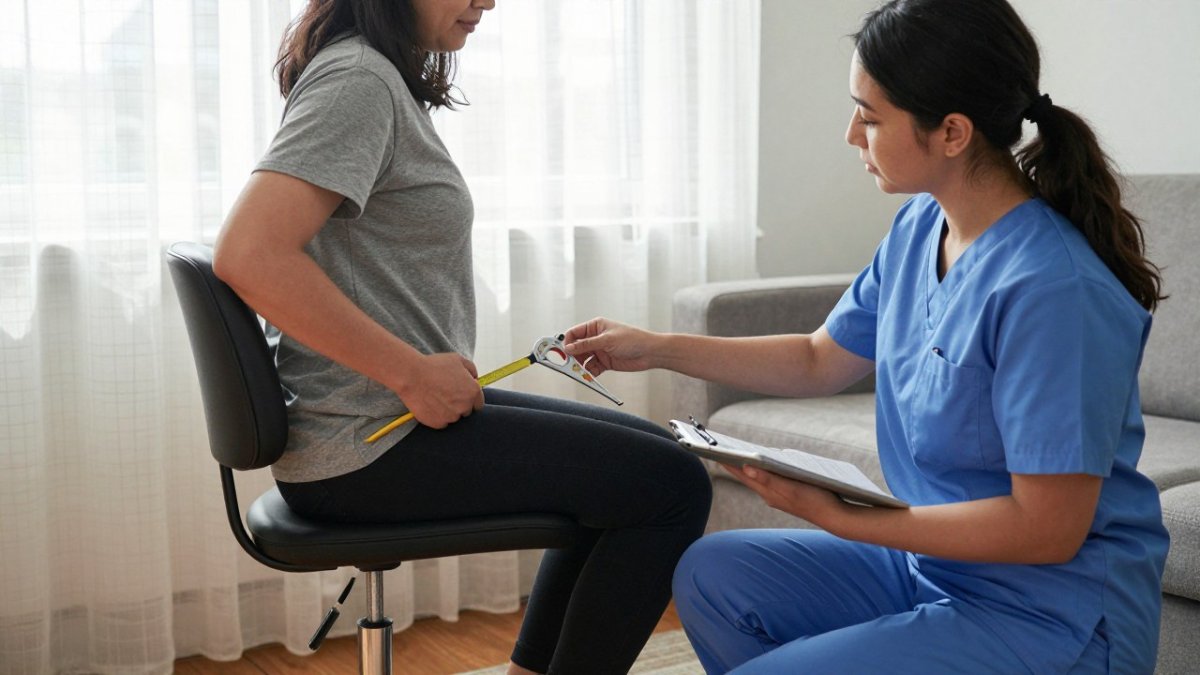
What to Record Before the Equipment Arrives
- Pelvic position: neutral, posterior tilt, anterior tilt, rotation or obliquity
- Trunk alignment: midline, fixed deformity, active control, fatigue pattern
- Hip angle and knee angle at rest, and whether either can change
- Foot position and whether the feet reach a support surface
- Skin integrity over the sacrum, ischia, trochanters and heels
- Tone: high, low, fluctuating, and what triggers a change
- Transfers, hoisting and how the person gets in and out
- The room: doorway width, floor surface, turning space, power access
A common mistake is recording posture only in the chair. Record it on the bed and in the wheelchair too, because a 24-hour postural care approach depends on what happens across the whole day (postural care guidance from NHS England(EXTERNAL_LINK: postural care guidance from NHS England | england.nhs.uk)).
Wheelchair Positioning Supports: Pelvis, Trunk and Legs
Pelvis first, always. A pelvic belt or contoured pelvic support sets the foundation, and lateral supports, trunk laterals and a chest harness build upward from there only as far as the person needs. Over-supporting the trunk when the pelvis is unstable simply braces a leaning body in the wrong place.
The VS6 complex-needs chair is the option we supply when pelvic, trunk and leg supports need to work together as one system.
Leg support is the most neglected part. Adjustable footplates set the hip angle, and the hip angle changes pelvic stability. Raise the footplates and you open the hip; drop them and you close it. Neither is right or wrong until you know the person's tone and tolerance.
Pressure Management Seating: What to Look For in the Cushion Interface
The cushion interface is where pressure redistribution actually happens, so judge it on immersion, envelopment and shear rather than thickness. A thick cushion the pelvis does not sink into spreads load poorly. A contoured cushion that holds the pelvis in neutral does two jobs at once: it protects skin and it stabilises posture.
The Four Tissue Sites to Protect
Pressure injury in complex seating clusters over four bony prominences: the sacrum, the ischial tuberosities, the greater trochanters and the heels. Each needs a different response from the cushion and the chair:
- Sacrum and ischia, need immersion and offloading through the cushion, plus tilt-in-space to rotate load away from the sitting bones.
- Trochanters, need lateral supports that spread load over a broad surface rather than a narrow pad pressing on one point.
- Heels, need footplates that support the whole foot and calf, not just the ball of the foot, so the heel is not left hanging.
Immersion, Envelopment and Shear
Immersion is how far the pelvis sinks into the cushion; envelopment is how much of the surface wraps around the body. A cushion that immerses but does not envelop concentrates load at the edges. Shear is the horizontal force that drags skin as the person slides forward, the mechanism behind many sacral and ischial injuries, and the reason a stable pelvis matters as much as a soft surface. Look for a cover that reduces friction, and check that belts and harnesses are not pulling the pelvis into a slide.
Matching the Cushion to the Posture
| Posture pattern | Cushion priority |
|---|---|
| Posterior pelvic tilt | Contoured cushion with a built-in posterior well to hold the pelvis |
| Anterior pelvic tilt | Flatter interface with a firm ischial shelf and a ramped front edge |
| Pelvic obliquity | Wedged or modular cushion built up on the low side |
| Fixed deformity | Custom-moulded interface shaped to the actual posture |
A common pattern is to choose a cushion by pressure mapping alone, without checking posture. That can produce a good map on a badly positioned pelvis. Use pressure mapping as one input, not the verdict, and repeat it after any change to tilt, recline or footplate height, because each of those changes the load. (Source: Royal College of Occupational Therapists)
Repositioning and the 24-Hour View
No cushion removes the need to reposition. Agree a turning and repositioning routine at handover, record it in the care plan, and check skin at every personal care episode for the first fortnight. Pressure management is a 24-hour job: the bed surface, the wheelchair cushion and the specialist chair all contribute, and a good chair cannot compensate for a poor bed.
If a permanent chair is still being specified, Venneo Velocity means an assessment can be on site within 48 hours when a discharge date is pressing.
Tilt-in-Space, Back Angle Recline and Adjustable Footplates
Tilt-in-space rotates the whole seat and back together, preserving the hip angle while redistributing pressure. Back angle recline opens the seat-to-back angle and changes the hip angle. They are not interchangeable, and the difference matters for tone, for skin and for transfers.
What Each Feature Actually Does
- Tilt-in-space keeps the hip angle constant and rotates the body backwards as a unit. It moves load off the ischia and sacrum without changing the relationship between pelvis and trunk, so postural alignment is preserved. It is the feature to reach for when pressure redistribution is the priority.
- Back angle recline opens the seat-to-back angle, which opens the hip. That can ease tone in some people and make transfers easier in others, but it also increases shear at the sacrum as the body slides, so it is not a free pressure-relief option.
- Adjustable footplates set the hip angle from below. Raise them and you open the hip; drop them and you close it. Neither is right or wrong until you know the person's tone and tolerance.
Matching the Feature to the Presentation
| Presentation | First-line feature | Why |
|---|---|---|
| High extensor tone | Tilt-in-space with a stable pelvic belt | Rotates the body without fighting the pattern |
| Low tone with fatigue | Moderate recline plus trunk laterals | Supports the trunk as tone fades through the day |
| Fixed hip flexion | Footplates raised to match the deformity | Avoids forcing the hip into a position it cannot reach |
| Frequent transfers | Recline for easier hoisting | Opens the hip and reduces the lift distance |
The Trade-Offs Nobody Mentions
Tilt and recline both change the line of sight and the reach envelope. A person tilted far back cannot see the room or reach a table without the whole chair being repositioned, which is why social participation has to be part of the specification, not an afterthought. Tilt also loads the back of the chair and the rear wheels, so check the chair's stability and the floor surface before specifying a steep angle.
Watch out: setting a steep tilt or recline and leaving it there all day defeats the purpose. The value comes from changing position through the day, so agree a schedule of angles at handover and record it in the care plan.
Setting the Three Together
Work in order: set the footplates to establish the hip angle, set the back angle to establish the seat-to-back angle, then use tilt to manage pressure and tone without disturbing either. Re-check all three after any change to the cushion, because a new interface changes the height of the pelvis and therefore the angles above it.
Our tilt-in-space and pressure management guide goes deeper on matching the two, and Venneo Velocity means an assessment can be on site within 48 hours when a chair needs re-setting after a change in posture.
Specialist Seating Hire for Short-Term and Transitional Needs
Specialist seating hire can suit cases where the need is temporary, where a permanent chair is still being specified, or where a person is moving between settings.
Hire suits:
- Hospital discharge where the home chair is not yet in place
- Trial periods before a funded purchase is approved
- Transitional care between a care setting and home
- Short-term rehabilitation where posture is still changing
Maintenance, Hygiene and the Feedback Loop After Handover
Maintenance and hygiene are where good seating quietly fails. Cushion covers, belts and harnesses need a cleaning schedule agreed at handover, and the person or their carers need to know who to call when something loosens.
The feedback loop matters just as much. We call one week after delivery to check everything is working. What most guides miss is that seating is not finished at delivery. It is finished when the person is using it well.
Book a Venneo Velocity Assessment Within 48 Hours
Venneo Velocity is our promise to be on site with you within 48 hours, with an itemised quote sent by email within 24 hours and a full assessment report provided within 24 hours of the visit. For discharge teams and case managers, that speed helps keep discharge and case progress on track.
We supply specialist seating, beds and positioning, access, mobility and bathing as one accountable partner, and we bring equipment options to the client for trial.
If your caseload has a person waiting on the right chair, that wait is the problem we exist to remove. Get started with Venneo and arrange a free on-site assessment within 48 hours.
Frequently Asked Questions
What postural support features are available in specialist seating?
Specialist chairs commonly combine several adjustable elements, such as tilt-in-space, back angle recline, lateral supports, a contoured cushion and an adjustable footplate. The right combination depends on the person's pelvic stability, muscle tone and how long they sit each day. A chair that offers independent adjustment of each feature is easier to fine-tune over time than one with fixed angles, and it makes later reviews far simpler for the prescribing therapist.
How do you choose seating for someone with complex postural needs?
Start with a face-to-face assessment rather than a catalogue. Record pelvic position, trunk symmetry, hip angle, existing pressure damage risk and how the person transfers. Then trial equipment in the setting where it will be used, because a chair that works in a clinic may not fit through a doorway at home. Venneo brings equipment options to the client for trial and attends joint assessments with the therapist.
Can specialist seating be hired for a short-term need?
Yes, and hire is often the sensible route when a need is temporary or still being defined. It suits hospital discharge where a person is going home before a long-term chair is funded, and it lets a therapist trial a configuration before committing to a purchase. Specialist seating hire can also help during a transition between systems. Ask what delivery, set-up and collection are included before you commit.
How often should specialist seating be reviewed?
Review at every change in condition, not only on a fixed calendar. Weight change, surgery, a shift in muscle tone or a new pressure area all justify a fresh look at the set-up. Beyond that, an annual review is a reasonable baseline for most long-term users, plus a check after any repair or cushion replacement. Build feedback from the person and their carers into each review, since they notice small changes in comfort and skin condition long before a formal assessment picks them up.
 Add venneo.co.uk as a preferred source on Google →
Got a client you’re weighing options for? Send us the measurements and we’ll come back with what fits.