
Tilt-in-Space Chair Reviews: Pressure Management Guide
Compare tilt-in-space chair reviews for pressure management. Get an assessment on-site within 48 hours with Venneo Velocity.
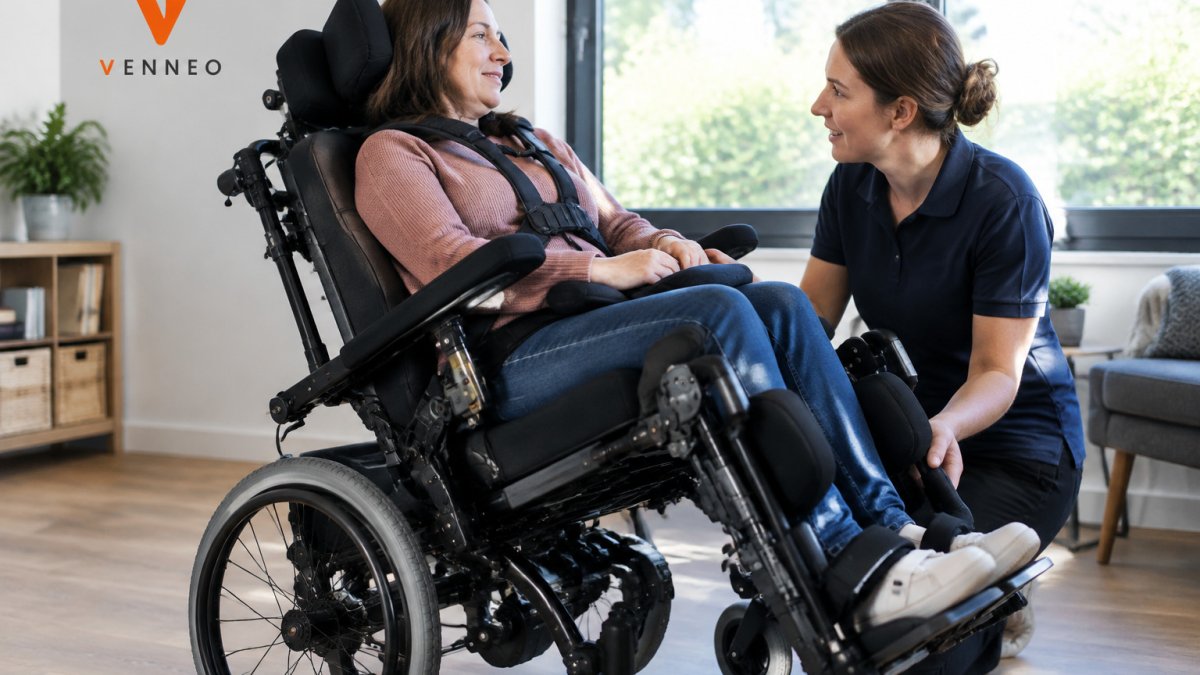

Last Updated: 8 November 2026
Quick Summary
A tilt-in-space chair manages pressure by tilting the seat and backrest as one unit, spreading weight along the back and thighs while keeping the hip angle stable to reduce shear. Reviews show it supports pressure management but does not replace a repositioning routine, and it suits users needing postural stability.
- Tilt-in-space keeps the hip angle stable, while recline opens the hip angle and raises shear risk.
- For kyphosis, trunk control difficulties or complex needs, tilt-in-space is usually the stronger starting point.
- A proper seating assessment is a face-to-face review of posture, pressure risk and daily routine in the client's own environment.
- Venneo Velocity visits the client with you within 48 hours and sends an itemised quote and full assessment report within 24 hours.
Table of Contents
- Tilt-in-Space Chair Pressure Relief: What the Reviews Actually Show
- Tilt-in-Space vs Recline Chair: Which Manages Pressure Better?
- Tilt-in-Space Chair Assessment: What a Proper Review Involves
- How to Use Tilt-in-Space for Comfort
- Frequently Asked Questions
Tilt-in-Space Chair Pressure Relief: What the Reviews Actually Show
A tilt-in-space chair tilts seat and backrest as one unit, keeping hips, knees and spine aligned while redistributing weight across a larger surface. Tilt-in-space supports pressure management but does not replace a repositioning routine.
Pressure relief comes from the tilt angle, which spreads weight along the back and thighs, and the seat cushion, which redistributes pressure at contact points. Tilt keeps the hip angle stable, reducing shear; recline opens the hip angle, which can encourage sliding forward.
Tilt-in-Space vs Recline Chair: Which Manages Pressure Better?
Neither wins outright. Tilt-in-space suits users needing postural stability and reduced shear; a recliner suits users needing hip opening.
Feature | Tilt-in-Space | Recline |
|---|---|---|
Hip angle | Held stable | Opens up |
Shear risk | Lower | Higher |
Best for | Postural support, complex needs | Comfort, breathing, leg elevation |
For long-term use with kyphosis, trunk control difficulties or complex needs, tilt-in-space is usually the stronger starting point. If you are weighing up a powered tilt-in-space option with an integrated seating system, you can view the VM4 powered tilt-in-space wheelchair to see how tilt and recline work together.
Tilt-in-Space Chair Assessment: What a Proper Review Involves
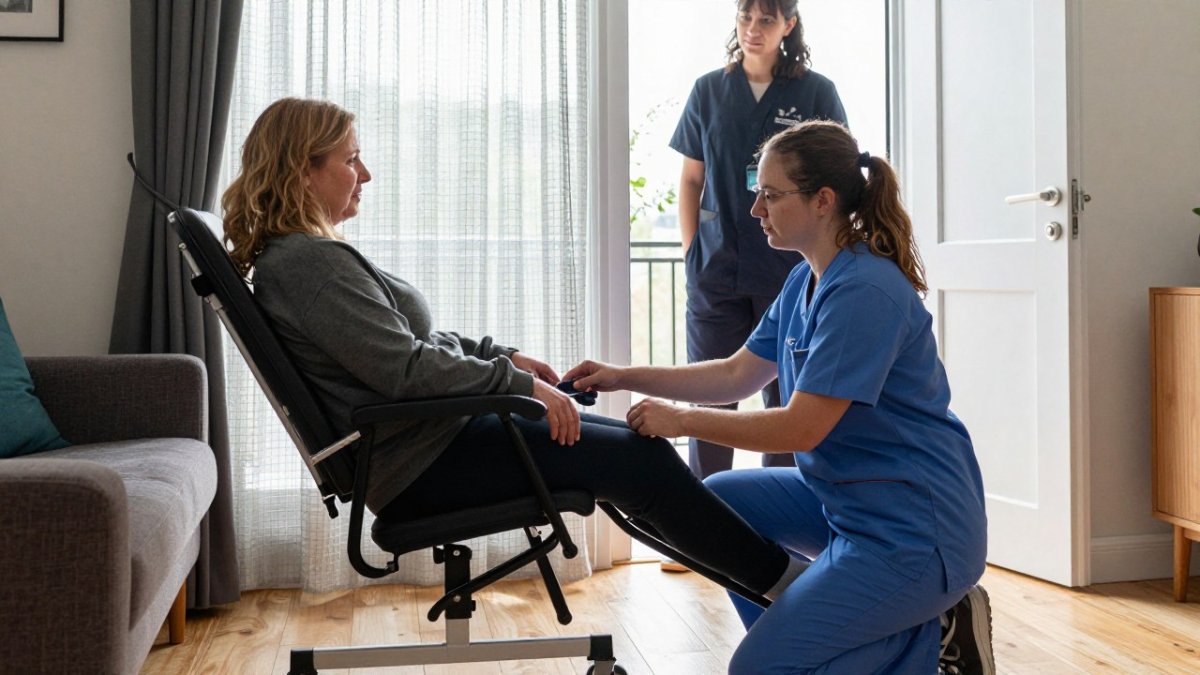
A proper seating assessment is a face-to-face review of posture, pressure risk and daily routine. Assessors generally need to see the client in their own environment, since positions set in a clinic may not suit a home setting.
This is where Venneo Velocity matters. We visit the client with you within 48 hours, bring equipment options for trial, and send an itemised quote and full assessment report within 24 hours of the visit. For complex seating needs, you can look at the VS6 complex seating range, supplied with a full specification and written assessment report.
How to Use Tilt-in-Space for Comfort
For tilt-in-space showering and bathing, where the chair must be able to move between upright and reclined positions it is important to take into account if it is going to be used over a toilet. If it is it is essential that the seat height is considered.
Getting a client into the right tilt-in-space chair should not take weeks of chasing suppliers. Venneo attends within 48 hours, brings equipment for on-site trial, and delivers the itemised quote, assessment report, delivery, set-up and staff training as one accountable service. Get started with Venneo and get the right seating in place without the procurement delay.
Frequently Asked Questions
How does tilt-in-space help with pressure management?
Tilt-in-space tilts the whole seat and backrest together, so the angle between the hips and knees stays the same while body weight shifts onto the backrest. That reduces loading on the buttocks and redistributes pressure over a larger support surface. It does not replace repositioning, skin checks or a pressure-management plan, but it gives carers a controlled way to change weight distribution through the day. A seating assessment should confirm whether tilt suits the person's posture and pressure risk.
What is the difference between tilt-in-space and recline?
Tilt-in-space rotates the entire seating system backwards, keeping the hip and knee angles fixed. Recline opens the angle between the backrest and seat, which can change pelvic position and increase shear if it is not set up carefully. For pressure management, tilt-in-space is usually preferred because it shifts weight without sliding the person forward. Some chairs combine both functions, so check which mechanism you are actually getting. The right choice depends on posture, trunk control and how the chair will be used.
Who should assess someone for a tilt-in-space chair?
A qualified occupational therapist or physiotherapist with seating experience should carry out the assessment, ideally in the person's home or care setting. They will look at posture, pelvic positioning, trunk control, pressure risk, transfers and how the chair fits daily routines. Venneo attends joint assessments with therapists and case managers and is on site within 48 hours through Venneo Velocity, with an itemised quote and full assessment report within 24 hours of the visit.
 Add venneo.co.uk as a preferred source on Google →
Got a client you’re weighing options for? Send us the measurements and we’ll come back with what fits.