
7 Home Adaptations That Help Disabled People Live Independently
Home adaptations help disabled people live independently, starting with step-free access.

Last Updated: 5 November 2026
Quick Summary
Home adaptations for disabled people remove barriers to daily living, and step-free access is usually where they start. A ramp only works if the whole route works, so check door width, the turn at the top, the landing and every trip hazard from the front door to the room the person uses.
- Bathroom adaptations carry the highest risk of going wrong because the room is small, wet and used daily.
- A level-access shower removes the step entirely, while a bath lift suits someone who wants to keep bathing.
- An occupational therapist home assessment decides which adaptations are worth doing.
- Funding may be available through a Disabled Facilities Grant administered by the local council.
- Renters need written landlord permission before any building work.
Table of Contents
- Home Adaptations for Wheelchair Users: Ramps, Doorways and Step-Free Access
- Accessible Bathroom Adaptations: Level-Access Showers and Bath Lifts
- Occupational Therapist Home Assessment: Choosing the Right Adaptations
- Frequently Asked Questions
Home Adaptations for Wheelchair Users: Ramps, Doorways and Step-Free Access
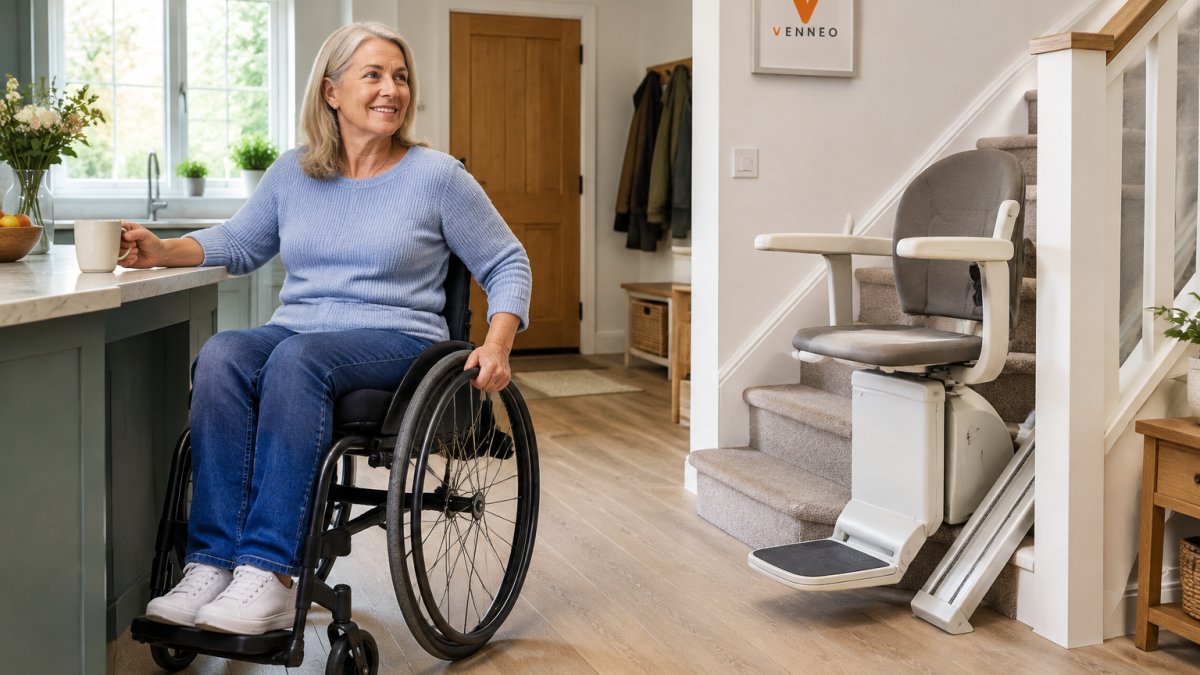
Home adaptations for disabled people remove barriers to daily living, and step-free access is usually where they start. At Venneo, we supply ramps, threshold solutions and stairlifts to discharge teams, case managers and occupational therapists, and internal thresholds often get forgotten while everyone argues about the front step.
A ramp only works if the whole route works: check door width, the turn at the top, the landing, and every trip hazard from the front door to the room the person uses. Read what to consider when specifying an access ramp, and browse the access equipment we supply.
Accessible Bathroom Adaptations: Level-Access Showers and Bath Lifts
Bathroom adaptations carry the highest risk of going wrong, because the room is small, wet and used daily. A level-access shower removes the step entirely; a bath lift suits someone who wants to keep bathing but cannot lower themselves safely.
We supply bathing products as part of our range. The assisted bathing and showering range shows what is available, and the tilt-in-space shower chair adapts to the person.
Both are British.
Occupational Therapist Home Assessment: Choosing the Right Adaptations
An occupational therapist home assessment is a structured review of how a person manages daily tasks at home, and it decides which adaptations are worth doing. It should cover current mobility and likely future changes, the carer's needs, and the property's limits.
Funding may be available through a Disabled Facilities Grant administered by the local council, which depends on eligibility and assessment (Disabled Facilities Grants). Check the official guidance on Disabled Facilities Grants for current eligibility and rules. Renters need written landlord permission before any building work. Use this specialist seating assessment checklist to structure equipment decisions.
Adaptation | Typical route | Key check |
|---|---|---|
Grab rails, minor works | Council minor adaptations | Usually no means test |
Ramps, level-access shower | Disabled Facilities Grant | OT assessment first |
Stairlift or through-floor lift | Grant or private purchase | Structural survey |
Frequently Asked Questions
What home adaptations are available for disabled people?
Home adaptations range from minor changes like grab rails and handrails to major building work such as ramps, widened doorways, stairlifts, through-floor lifts and accessible bathroom adaptations. Other options include lowered worktops, level-access showers and bath lifts. An occupational therapist home assessment can identify which adaptations suit your needs, and a Disabled Facilities Grant may help with funding for eligible work.
Can disabled people get help paying for home adaptations?
Yes, a Disabled Facilities Grant from your local council can help fund essential adaptations, subject to eligibility and an assessment. Your local council will confirm the current rules and application process. For equipment not covered by the grant, specialist suppliers like Venneo can provide itemised quotes.
Can a rented home be adapted for a disabled person?
Yes, but you will usually need permission from your landlord before making changes. Your local council can advise on the process. Always keep a record of any agreement and check whether the work needs to be reversed when you leave.
Getting the assessment right first time saves months of delay and repeat visits. Venneo attends the client with you within 48 hours, sends an itemised quote and a full assessment report within 24 hours, and calls a week after delivery to check everything works. Get started with Venneo and get people home sooner.
Enquire now Add venneo.co.uk as a preferred source on Google →
Got a client you’re weighing options for? Send us the measurements and we’ll come back with what fits.