
Funding Options for Specialist Seating in the UK
Find out how NHS, charity and local trust funding for specialist seating in the UK works, and what each funder needs before it will approve your request.

Last Updated: November 10, 2026
Quick Summary
Funding options for specialist seating in the in the UK start with an NHS assessment by an occupational therapist, which sets the route: community equipment services, wheelchair services, or continuing healthcare funding. Charitable grants, condition-specific charities, local trusts and VAT relief can fill gaps, but each funder has its own criteria and needs a clinical report and itemised quote.
- Ask your occupational therapist or local council which NHS route applies where you live.
- Eligibility rests on clinical need, so a formal assessment is the essential first step.
- Higher-specification chairs often need a different route from standard provision.
- Most funders ask for an assessment report, an itemised quotation and a statement of need.
- Confirm whether a funder pays the supplier or the applicant before ordering equipment.
Table of Contents
- NHS Funding for Specialist Seating
- Grants for Disability Equipment and Charity Funding
- Building a Funding Request for Specialist Seating
- The Specialist Seating Assessment and Next Steps with Venneo
- Frequently Asked Questions
NHS Funding for Specialist Seating
Finding funding options for specialist seating in the UK starts with the NHS, but the route depends on where you live and what the seating is for. In England, community equipment services and wheelchair services are the usual routes, and provision is set locally. Scotland, Wales and Northern Ireland each organise their services differently, so ask your occupational therapist or local council which route applies where you live. (Source: VAT relief for disabled people)
Eligibility rests on clinical need, not diagnosis alone, and a formal assessment from an occupational therapist or other healthcare professional is the gateway (Are you eligible for an NHS wheelchair?). That report should record posture, pressure relief, mobility, transfers and the environment where the chair will be used, because it becomes the supporting evidence for any funding request.
There are three common statutory routes:
- Community equipment services, usually for daily living equipment and basic seating, often delivered through a council and NHS partnership.
- Wheelchair services, for wheelchairs and some postural seating, with eligibility set by the service's own criteria.
- Continuing healthcare or complex care funding, where seating is part of a wider package for someone with complex, ongoing health needs.
Higher-specification chairs often need a different route from standard provision, so ask the assessing therapist early which route they recommend.
If a request is refused or the wait is long, ask for the reasons in writing, request a reassessment and ask what evidence would change the decision. Keep copies of the assessment report and correspondence, because the same file often supports a charity application later. A practical how to build a specialist seating assessment checklist helps you capture the right evidence first time.
Grants for Disability Equipment and Charity Funding
Charity grants fill the gap the NHS leaves, but each funder has its own criteria, forms and timelines.
- Charitable trusts and foundations, often fund disability equipment where statutory services fall short, usually with a cap per applicant.
- Condition-specific charities, brain injury, neurological and muscular dystrophy charities frequently fund specialist seating, sometimes only for members or people in a defined region.
- Local and regional charities, rotary clubs, masonic lodges and community foundations sometimes fund equipment locally, with smaller awards and quicker decisions.
- Crowdfunding, useful for larger shortfalls, but works best paired with a clinical assessment and a clear quotation.
- VAT relief, qualifying equipment for disabled people may be eligible for relief, reducing the total cost rather than providing a grant; confirm eligibility with HMRC before you budget.
Eligibility criteria vary widely, so check each funder's rules before applying. Funders commonly ask for a clinical assessment report, an itemised quotation and a short statement linking the equipment to the person's needs. Some also ask for financial information or evidence that statutory routes have been explored. Gather all of this first, because an incomplete application is the most common reason for delay.
A common mistake is applying without a clear quotation and assessment report. Funders want to see clinical justification and a firm price. For official guidance on VAT relief, check HMRC guidance on VAT relief for disabled people.
Watch out: some funders pay the supplier rather than the applicant, so confirm the payment route before ordering. If buying privately or crowdfunding, get an assessment before purchase and check returns, warranties and clinical suitability.
Timelines vary by funder, so apply early and keep copies of everything. Where one funder declines, the same file can usually be adapted for the next.
Building a Funding Request for Specialist Seating
A strong request for funding options for specialist seating in the UK rests on three documents: a clinical assessment report, an itemised quotation, and a clear statement of need.
Build the file in this order:
- Get a formal assessment from an occupational therapist
- Obtain an itemised quotation from the supplier
- Write a short statement linking clinical need to the equipment
- Check VAT relief eligibility
- Submit to the relevant funder with a realistic timeline
A practical how to build a specialist seating assessment checklist helps you capture the right evidence first time.
The Specialist Seating Assessment and Next Steps with Venneo
Speed is where most equipment journeys stall. Venneo Velocity is our promise to be on site within 48 hours for an assessment, so professionals are not left waiting for a visit.
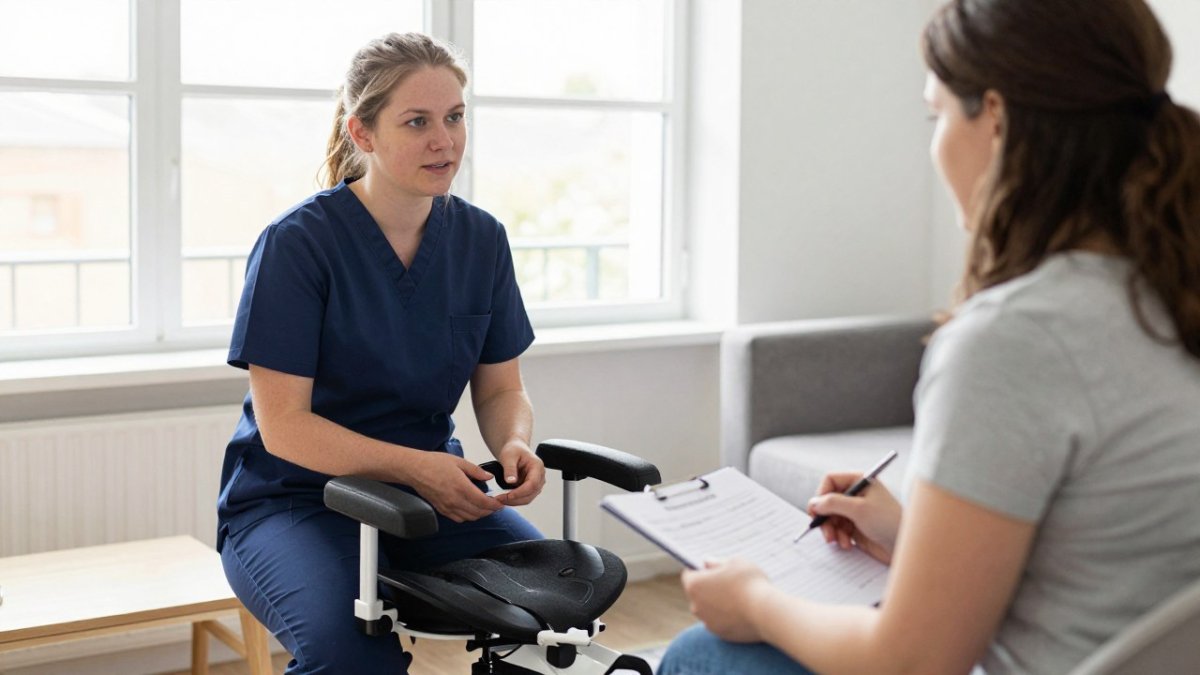
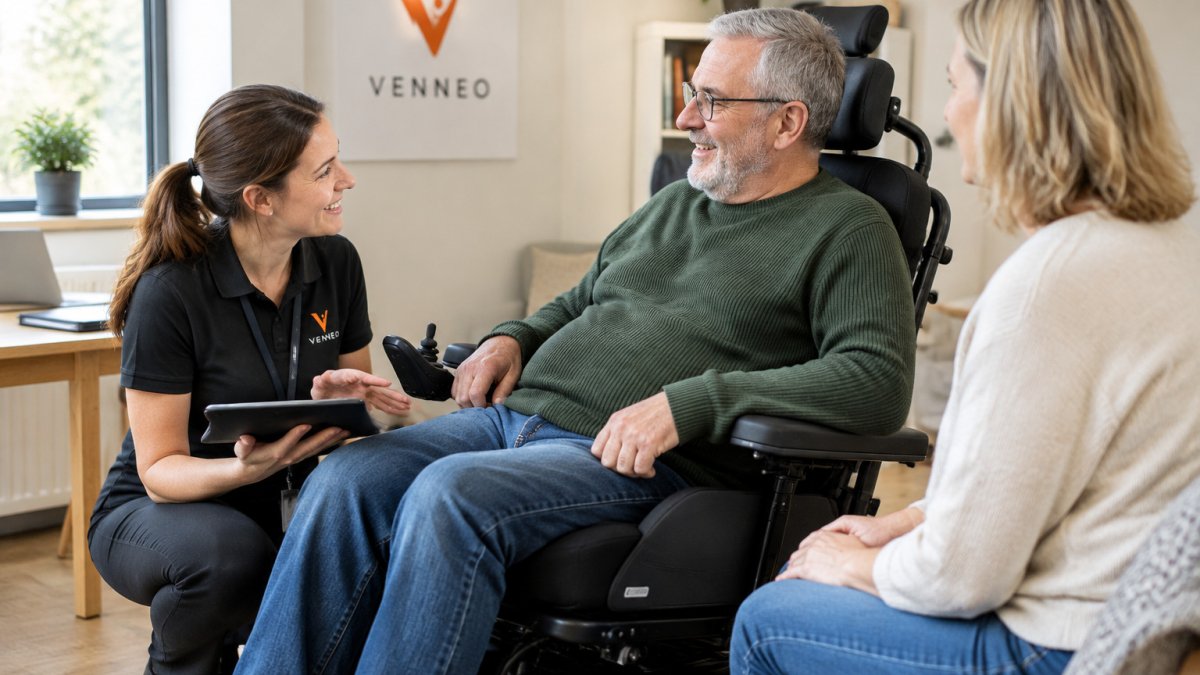
We attend joint assessments in the client's home or care setting, then send an itemised quote and a full assessment report within 24 hours, supporting funding approvals and reducing admin for busy therapists. We are a corporate associate of BABICM, and we cover seating, beds, mobility, bathing and access as one accountable supplier.
To arrange a free on-site equipment assessment, contact our team and we will confirm a visit.
Speed is where most equipment journeys stall, so Venneo's commitments are set out below.
| Commitment | Timeframe | Detail |
|---|---|---|
| Venneo Velocity on-site assessment | Within 48 hours | Joint assessment in the client's home or care setting |
| Itemised quote and assessment report | Within 24 hours | Supports funding approvals and reduces admin for therapists |
| Professional body | BABICM | Corporate associate |
Funding for specialist seating is rarely one route. It is a combination of NHS provision, charity grants and self-funding, and the paperwork decides how quickly it moves. Venneo removes the delay with on-site assessments within 48 hours, itemised quotes and full reports within 24 hours, and a single supplier across five equipment categories. Get started with Venneo and get the right seating to your client faster.
Frequently Asked Questions
Can the NHS fund specialist seating?
Yes, in some circumstances. NHS funding for specialist seating usually comes through community equipment services or a continuing healthcare package, and it depends on clinical need and your local integrated care area. Provision varies by council and nation, so ask your occupational therapist which route applies where you live. A formal specialist seating assessment is normally the starting point, and the resulting report is what supports the request.
What evidence is needed to apply for specialist seating funding?
Most funders want a specialist seating assessment report from an occupational therapist or other healthcare professional, evidence of clinical need, and a detailed quotation. Supporting evidence such as photographs, pressure relief requirements and postural support needs strengthens the case. Keep a clear record of what has already been tried. A funding request for specialist seating is far more likely to succeed when the paperwork shows why standard provision will not meet the person's care needs.
What should I do if a funding request for specialist seating is declined?
Ask for the reasons in writing, then check the appeals and complaints process for the body that refused. For NHS or local authority decisions, that usually means the formal complaints route for that organisation. You can also revisit grants for disability equipment from charities, or combine partial funding with self-funding. A revised assessment report addressing the specific reasons for refusal often helps a second application.
 Add venneo.co.uk as a preferred source on Google →
Got a client you’re weighing options for? Send us the measurements and we’ll come back with what fits.